Rapprocher le documentaire des jeunes : l'histoire a besoin d'une nouvelle narration
15:18

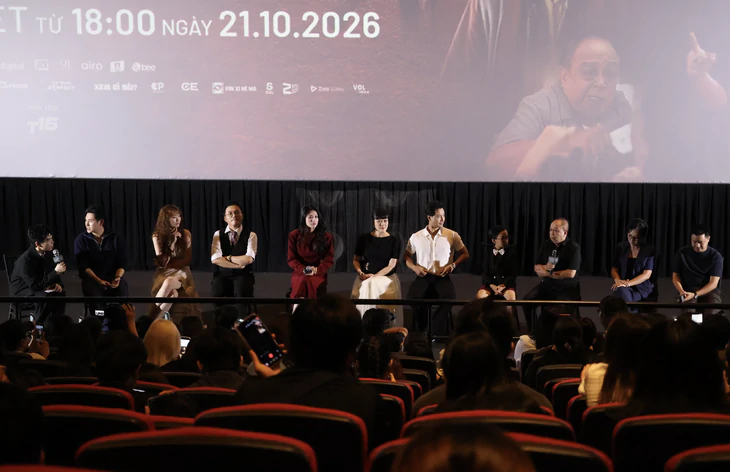
Le public assistant à la projection du documentaire « Vietnam - Hô Chi Minh »
Un héritage immense, mais une distance encore grande
En près de 70 ans d'existence (1956-2026), le Studio central du film documentaire et scientifique (DSF) a produit des milliers d'œuvres, conservant des millions de mètres de pellicules sur la guerre, la paix, la vie sociale, la science, la culture et le peuple vietnamien. Pourtant, le paradoxe est que, pendant de nombreuses années, bon nombre de ces films précieux sont restés dans les archives, peu connus en dehors des cercles spécialisés ou diffusés sur des créneaux télévisuels très limités.
Dans un contexte où les réseaux sociaux façonnent continuellement de nouvelles habitudes de consommation, les jeunes sont de plus en plus habitués aux contenus courts, rapides et divertissants. Un documentaire de plusieurs dizaines de minutes, voire d'une heure, au rythme lent et à la structure complexe, ne parvient pas facilement à susciter l'intérêt. C'est une réalité que les professionnels doivent accepter s'ils veulent rapprocher le documentaire du jeune public.
M. Trịnh Quang Tùng, directeur général adjoint du Studio central du film documentaire et scientifique (DSF), estime qu'il ne s'agit pas seulement de conserver les archives, mais aussi de trouver des moyens pour que ces mémoires sortent des archives et vivent dans la société contemporaine.
C'est dans cette optique que le projet « Việt Nam chưa kể hết » (Le Vietnam jamais raconté) a été lancé par le DSF comme un nouveau modèle d'approche, où le documentaire n'est pas seulement projeté, mais placé dans un espace de dialogue, d'expérience et d'interaction. Chaque mois, le programme choisit un thème lié aux jalons historiques et culturels du pays. Après la projection, un échange avec des témoins, des artistes et des cinéastes est organisé, ce qui constitue l'attrait unique du programme.
En mai, à l'occasion du 136e anniversaire de la naissance du Président Hồ Chí Minh, le film « Việt Nam - Hồ Chí Minh » a été choisi comme un pont permettant aux jeunes d'aborder le parcours de l'Oncle Hô à travers les images authentiques du cinéma documentaire. Lorsque l'Artiste du Peuple et caméraman de guerre Nguyễn Văn Nẫm a raconté ses jours de tournage sous les bombes à Quảng Trị ou les moments face aux raids de B-52 à Hanoï, l'atmosphère dans la salle s'est souvent faite recueillie. À travers ces récits, l'histoire devient beaucoup plus proche et vivante.
La guerre apparaît à travers les souvenirs de ceux qui ont traversé les bombes, les blessures encore visibles sur leurs corps et la conviction de cette génération de cinéastes qui, à l'époque, devait enregistrer ce qui se passait pour que les générations futures comprennent comment leurs aînés ont vécu, combattu et sacrifié leur vie. C'est là la valeur unique que le documentaire conserve parmi tant d'autres types de contenus aujourd'hui : l'authenticité et la profondeur émotionnelle.
L'histoire n'est pas loin des jeunes, c'est seulement la manière de la raconter qui n'est pas assez proche
Selon M. Đỗ Lệnh Hùng Tú, président de l'Association du cinéma vietnamien, la difficulté actuelle du film documentaire ne réside pas dans un manque de valeur, mais dans la distance avec le public. Le Vietnam possède un fonds d'archives cinématographiques extrêmement précieux, témoignant de la guerre, de la paix, du développement du pays et du portrait de plusieurs générations de Vietnamiens. « Beaucoup de ces images deviennent aujourd'hui un héritage culturel car les personnes filmées, tout comme les cinéastes, ne sont plus parmi nous », partage M. Đỗ Lệnh Hùng Tú.
Selon lui, la responsabilité du cinéma d'aujourd'hui est à la fois de conserver et de trouver des moyens de raconter à nouveau l'histoire pour qu'elle continue de vivre dans la conscience de la nouvelle génération. À l'ère numérique, les jeunes reçoivent l'information avec un rythme et un langage différents. Cela exige que le documentaire augmente sa dimension narrative, son interactivité et, surtout, qu'il apparaisse là où les jeunes sont présents.
C'est aussi la raison pour laquelle le projet « Việt Nam chưa kể hết » a choisi de s'associer au BEAT Network, une plateforme médiatique qui a l'avantage d'atteindre les jeunes dans l'environnement numérique. Si le DSF apporte le fonds de films originaux et la valeur documentaire, les réseaux sociaux deviennent un « bras prolongé », rapprochant les tranches d'histoire grâce à des clips courts, des contenus de présentation, des coulisses ou des conversations avec des témoins. Il ne s'agit pas de remplacer le documentaire traditionnel, mais de créer une « porte d'entrée » pour susciter la curiosité.
Le défi n'est donc pas de « divertir » l'histoire, mais de trouver un nouveau langage narratif pour que l'histoire devienne plus accessible. Il peut s'agir de projections combinées à des échanges avec des témoins, de versions courtes servant d'introduction avant de voir le film complet, ou d'une narration plus riche en émotions et proche de l'expérience personnelle. L'essentiel reste de préserver l'esprit d'honnêteté du cinéma documentaire.
La naissance de « Việt Nam chưa kể hết » peut être considérée comme une expérience notable dans le parcours visant à ramener le documentaire dans la vie contemporaine. À une époque où le rythme de vie et l'information changent chaque jour, l'histoire ne deviendra pas lointaine si elle est racontée avec un langage adapté à la manière de recevoir des jeunes d'aujourd'hui. Grâce à de telles projections, des images qui semblaient dormir dans les archives ont l'opportunité de connecter la jeune génération au passé, à ceux qui ont traversé la guerre pour construire le présent.
Partager :