La pression du métier de réalisateur à l'ère de l'IA
10:23

Le réalisateur Phạm Vĩnh Khương lors de l'événement Master AI Filmmaking. Photo : NV
L'intelligence artificielle (IA) s'immisce dans presque toutes les étapes de la réalisation cinématographique, de l'écriture du scénario à la conception visuelle, en passant par la création de décors, le montage et la post-production. Des tâches qui nécessitaient autrefois une équipe nombreuse peuvent désormais être réalisées plus rapidement et plus efficacement.
Cependant, lors du salon technologique de Hô Chi Minh-Ville (Conviction 2026), le réalisateur Phạm Vĩnh Khương a souligné que la vitesse et la capacité de modélisation des machines ne déterminent pas la valeur d'une œuvre.
« L'IA peut nous aider à générer des images plus rapidement, à tester davantage d'idées et à réduire certaines contraintes de ressources. Mais la technologie ne peut pas décider d'elle-même quelle histoire mérite d'être racontée, quelle émotion doit être préservée ou quel esprit doit imprégner un cadre. Ces choix appartiennent toujours à l'humain », a analysé le réalisateur Phạm Vĩnh Khương.
Ce n'est pas seulement un point de vue professionnel. C'est aussi l'affirmation que le cinéma, même revêtu des atours de la technologie moderne, puise toujours sa source dans le cœur, l'expérience et l'empathie des cinéastes.

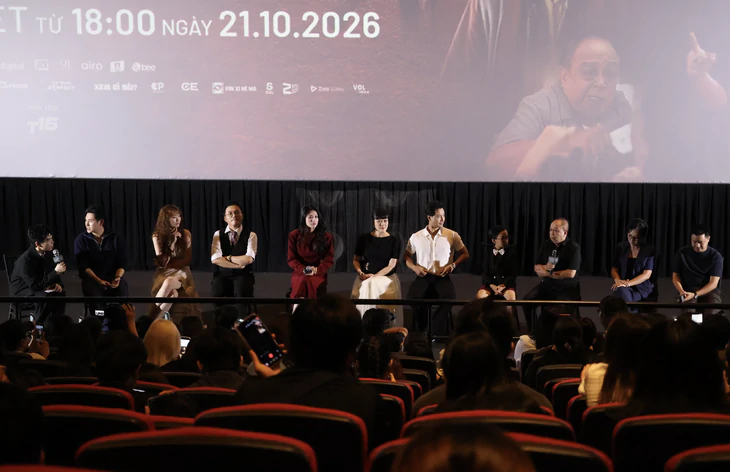
Images en direct de la Journée de la technologie de Hô Chi Minh-Ville. Photo : NV
L'IA peut assister les cinéastes dès la phase de développement des idées, la création de personnages, la construction de décors, le traitement sonore et la post-production. De nombreuses options peuvent être testées en un temps record, réduisant ainsi certaines tâches répétitives du processus de production.
Toutefois, les capacités technologiques soulèvent des questions sur la place de l'artiste. Le réalisateur Phạm Vĩnh Khương pose la question : « L'IA va-t-elle tuer le travail artisanal humain ? ».
L'IA peut aider à rationaliser le processus de réalisation et à réduire la dépendance envers des équipements ou des ressources lourdes. La technologie favorise également la production de contenus via smartphone, offrant davantage d'opportunités aux individus ou aux petits collectifs créatifs de concrétiser leurs idées.
Néanmoins, le raccourcissement du temps de production ne signifie pas que l'IA peut créer seule une œuvre complète. Un film nécessite toujours un humain pour définir l'histoire, choisir le langage visuel, organiser les émotions et assumer la responsabilité du message final.
Le réalisateur a indiqué avoir testé l'IA sur divers types de produits tels que des courts et longs métrages, des clips musicaux, des images numériques et des contenus de reconstitution historique. Son unité a également présenté le système AS - Art Supper/AestheticSynth, appliqué au processus de production cinématographique assisté par IA.
La technologie modifie la manière dont les produits cinématographiques sont conçus. Auparavant, le réalisateur devait coordonner les acteurs, le matériel, les décors et l'équipe technique. En utilisant l'IA, le cinéaste doit savoir décrire ses idées, formuler des requêtes et sélectionner les résultats pertinents parmi les nombreuses options générées par la technologie.

Images de l'événement. Photo : NV
Le réalisateur Phạm Vĩnh Khương qualifie ce processus de « dialogue avec la technologie ». L'IA peut générer des images à la demande, mais l'utilisateur doit toujours orienter, évaluer et décider quels détails seront conservés dans l'œuvre.
Les discussions lors de Conviction 2026 montrent que l'IA devient un nouvel outil dans la production cinématographique. La technologie permet aux cinéastes d'expérimenter davantage et de réaliser des idées qui exigeaient autrefois des ressources considérables. Cependant, le message clé retenu lors de l'événement est le suivant : « C'est toujours l'humain qui décide de l'histoire et de la valeur de l'œuvre ».
Partager :