Article by General Secretary and President To Lam: Vietnam's revolutionary press in the digital age

Local Info

Article by General Secretary and President To Lam: Vietnam's revolutionary press in the digital age

Thời báo VTV

18/06/2026

23:26

VTV.vn - VTV Times respectfully presents an article by General Secretary and President To Lam titled: The Vietnamese Revolutionary Press in the Digital Age.

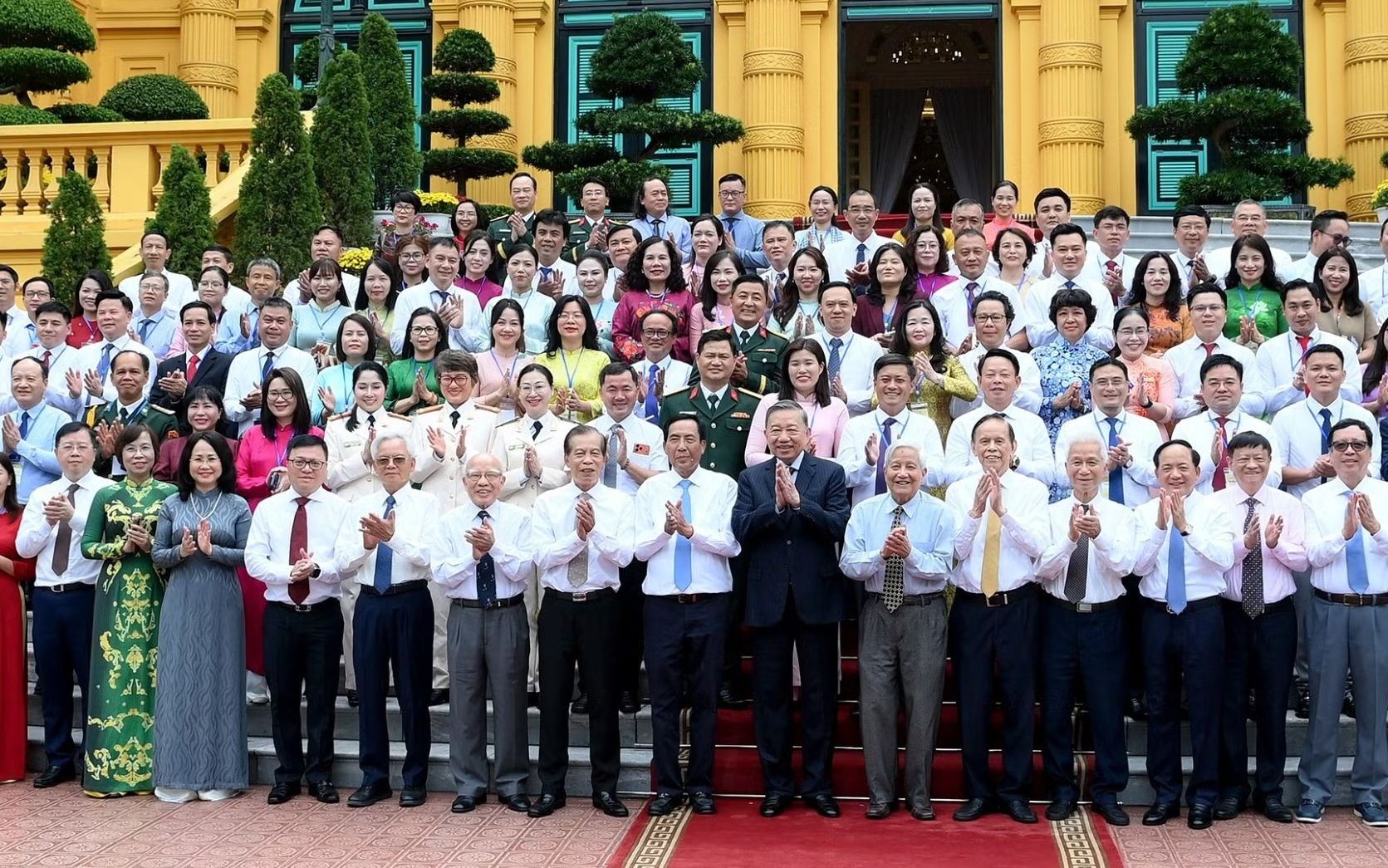
Tổng Bí thư, Chủ tịch nước Tô Lâm gặp mặt 101 nhà báo tiêu biểu, đoạt Giải Báo chí Quốc gia qua các năm, nhân dịp Kỷ niệm 101 năm Ngày Báo chí cách mạng Việt Nam (21/6/1925-21/6/2026).

Tổng Bí thư, Chủ tịch nước Tô Lâm gặp mặt 101 nhà báo tiêu biểu, đoạt Giải Báo chí Quốc gia qua các năm, nhân dịp Kỷ niệm 101 năm Ngày Báo chí cách mạng Việt Nam (21/6/1925-21/6/2026).

After more than a century of accompanying the nation, the Vietnamese revolutionary press is entering a very new and distinct period of development in almost every aspect. The digital space has become an essential component of daily life. Digital technology, big data, artificial intelligence, social media, and cross-border communication platforms have fundamentally changed how information is created, distributed, received, and verified.

Today, people study, work, communicate, shop, entertain themselves, express opinions, and participate in social issues through online platforms. The rapid and diverse flow of information brings great opportunities for the dissemination of knowledge, social democracy, and innovation. The major guidelines of the Party, new policies of the State, and positive information can reach tens of millions of people simultaneously through various forms and media. Technology helps the press get closer to the people and receive faster feedback.

However, the online environment also makes the information landscape more complex, easily influenced by fleeting emotions, misinformation, algorithmic manipulation, and intentional information dissemination activities. Fake news, half-truths, ambiguity, forged images and sounds, AI-generated content, copyright infringement, cyberattacks, and data theft are becoming increasingly sophisticated. Misinformation can spread far before the truth can be verified. The situation of edited or out-of-context statements can damage the reputation of individuals and organizations, and even affect the people's trust in the policies of the Party and the State.

In the new media order, the press no longer holds a near-monopoly on news dissemination. By the end of 2025, Vietnam will have approximately 85.6 million Internet users, equivalent to 84.2% of the population, and about 79 million social media user identities. According to the latest statistics, the total number of accounts used by Vietnamese people on domestic social networks is about 110 million, while accounts on foreign social networks are about 203 million. Such a digital environment means the press has both the opportunity to reach a wider audience than ever before and the challenge of competing directly with the massive stream of content created by platforms and users every hour and every minute. In the digital space, almost every individual can report news. Social media accounts can all exert influence within a certain community.

However, this change does not diminish the role of the revolutionary press. On the contrary, when there is too much information, society needs reliable sources more than ever to determine what is true, what still needs verification, and what is merely crowd emotion or intentional orchestration. This requires professionalism, a serious professional work ethic, and courage in the face of all pressures. The press must be the place people turn to when they need reliable confirmation, not a place that chases trends. Society needs a reliable place to understand the truth. People need to know what happened, why it happened, who it affects, where the responsibility lies, and what the evidence-based solutions are.

The digital space also needs journalistic works that are rich in data, diverse in content, varied in expression, and deep in policy analysis. Many current issues, from digital transformation, green transition, and administrative reform to social security policies and international economic fluctuations, are difficult to grasp if one only reads fragmented news snippets. Therefore, the responsibility of the press is not just to be faster, but first and foremost to be more accurate, more profound, and more useful.

From this requirement, digital transformation in the press cannot be simply understood as setting up more websites, opening social media accounts, or equipping modern devices. It must be a comprehensive innovation in leadership thinking, editorial models, production processes, data management, content distribution, audience measurement, press economics, and professional culture. Digital journalism is not old journalism placed on a new platform, but a new way of organizing in a new context.

Within the newsroom, each piece of work should be viewed as an information product with a clear objective. All forms of expression must adhere to a single standard: accuracy, humanity, verification, and responsibility. It is necessary to avoid being serious on the main page while being lax on secondary platforms. The more multi-platform the press becomes, the more unified its standards must be.

In the digital age, data is a pillar of journalism. Data is not just numbers; it is the foundation of verification and a means to build and convey journalistic works more persuasively and comprehensively. Large, reputable news agencies and press organizations around the world are currently investing heavily in data construction and dedicating significant human resources to data work. When data is well-built and managed, the press will increase its persuasiveness and have the ability to detect issues early.

Another major issue is the initiative regarding cross-border platforms. The press needs to reach where the public is present through all platforms, but it cannot be dependent on external algorithms. If it only chases views and recommendation mechanisms, press agencies are prone to losing reader data, losing distribution rights, losing their identity, and facing risks when algorithms change. Mastering the digital space means knowing how to exploit global platforms while building one's own channels, own reader communities, own data, and own reliable brand.

Therefore, national information sovereignty needs to be more fully recognized. The revolutionary press must be the core force in protecting that sovereignty. Protecting information sovereignty does not mean closing off. Vietnam needs a strong digital external information press that is multilingual, multimedia, and capable of conveying Vietnam's message to the world in modern language and with Vietnamese identity. Achievements in innovation, national culture, and the independent, self-reliant, peaceful, friendly, cooperative, and developmental foreign policy need to be presented through attractive products and persuasive data.

To fulfill that mission, the press needs sustainable development resources. The digital press economy is not contrary to the goals and orientations of the revolutionary press. A press lacking resources will find it difficult to invest in technology, protect copyrights, train human resources, and retain talent. However, the press economy must serve the journalistic mission and not lead the press into sensationalism, clickbait, exploiting private lives, or commercializing socio-political information. The press needs new revenue sources from digital subscriptions, copyrights, data, and specialized products. If a healthy digital press economic model cannot be built, it will be difficult for the press to maintain the capacity to invest in high-quality content, investigation, analysis, verification, and copyright protection.

Press copyright in the digital and AI environment must also be strictly protected. Journalistic content is the result of creative labor, operations, verification, editing, financial investment, and legal responsibility. Copying, editing, exploiting, aggregating, and commercializing will weaken the economic foundation of the press. Protecting copyright is protecting genuine labor and the quality of information in society.

The final issue remains people. Every orientation and strategy depends on people. Journalists in the digital era must know how to work with data, digital tools, social media, open sources, and information security standards. The more tools there are, the more courage journalists need. It is necessary to avoid the situation of publishing before verifying or letting social media lead the way. Journalists are not allowed to trade reputation for views. Before publishing a journalistic work, journalists need to answer three questions: is it true, is it necessary, and is it useful to society?

Leaders of press agencies must also change. An editor-in-chief in a digital newsroom is not just a content approver, but must also create strategies for products, data, audiences, technology, and human resources. Press agencies need a new working culture: professional, disciplined in verification, agile in response, open to innovation, ready to experiment, but not lax with standards. Retraining staff must become a regular task, focusing on digital verification, data security, multi-platform journalism, AI ethics, and compliance with intellectual property laws.

In the context that the Law on the Press No. 126/2025/QH15 will take effect from July 1, 2026, perfecting the digital press institution is extremely necessary. The institution must protect the right to operate legally, encourage innovation, create corridors for digital newsrooms, digital press economics, data journalism, copyright protection, and responsible AI use. At the same time, press discipline must be strictly maintained; violations regarding information, professional ethics, and taking advantage of the press for profit must be handled in a timely manner.

An urgent task is to form information verification capacity on a national scale. There needs to be a close connection between management agencies, key press agencies, technology experts, training institutions, platform businesses, and the community to detect, verify, warn, and refute fake news, forged statements, forged images of state agencies, and dissemination activities that cause information confusion. That network must operate quickly, have clear procedures, and use data and evidence to persuade the public.

Throughout the entire process of reforming the press, the public must be placed at the center. The digital public today does not just receive information but frequently provides feedback, asks questions, cross-verifies, gives suggestions, provides data, and demands more transparency from the press. The press must know how to listen but not chase every fleeting emotion, respect debate but absolutely not tolerate toxic information. With the youth, the press can innovate to reach them better through appropriate language, formats, and platforms, but must not lower standards.

The Vietnamese revolutionary press in the digital era must therefore harmonize political courage and technological capacity, revolutionary ideals and innovative thinking, combativeness and humanity, national responsibility and integration capability. Mastering the digital space cannot be done with slogans alone but must start from each newsroom, each verification process, each data warehouse, each journalistic product, each training class, and each journalist's behavior toward the public.

On the occasion of the anniversary of the Vietnam Revolutionary Press Day, I hope that press agencies and every journalist will turn revolutionary tradition into a driving force for innovation. Press agencies need to become a modern digital newsroom, a center for data and knowledge, and a reliable address for the people. Journalists continue to be soldiers on the digital ideological-cultural-information front, firm in courage, pure in ethics, profound in humanity, and proficient in technology. With that orientation, I believe that the Vietnamese revolutionary press will continue to contribute worthily to the cause of serving the Fatherland and the people in the digital age.